Hamilton Elite Roofing repairs storm-damaged roofs in Hamilton, NJ and in nearby communities including Robbinsville, Hopewell Township, Burlington and Lumberton. With more than 20 years on roofs in this area, we know what a strong gust, a hail burst or a falling limb does to shingles, flashing and decking, and how to document it so your claim reflects what actually happened.
Storm work has two halves. The first is protecting the house: covering open areas and stopping water from getting in. The second is the record: photographs and a written description that you can hand to your insurer, followed by a permanent repair that matches the rest of the roof.
We keep our role clear. We document the damage for your own claim and will meet the adjuster on site when you ask, but we do not negotiate on your behalf. That role belongs to you, your insurer’s adjuster or a licensed public adjuster.
Types of Storm Damage
Wind Damage
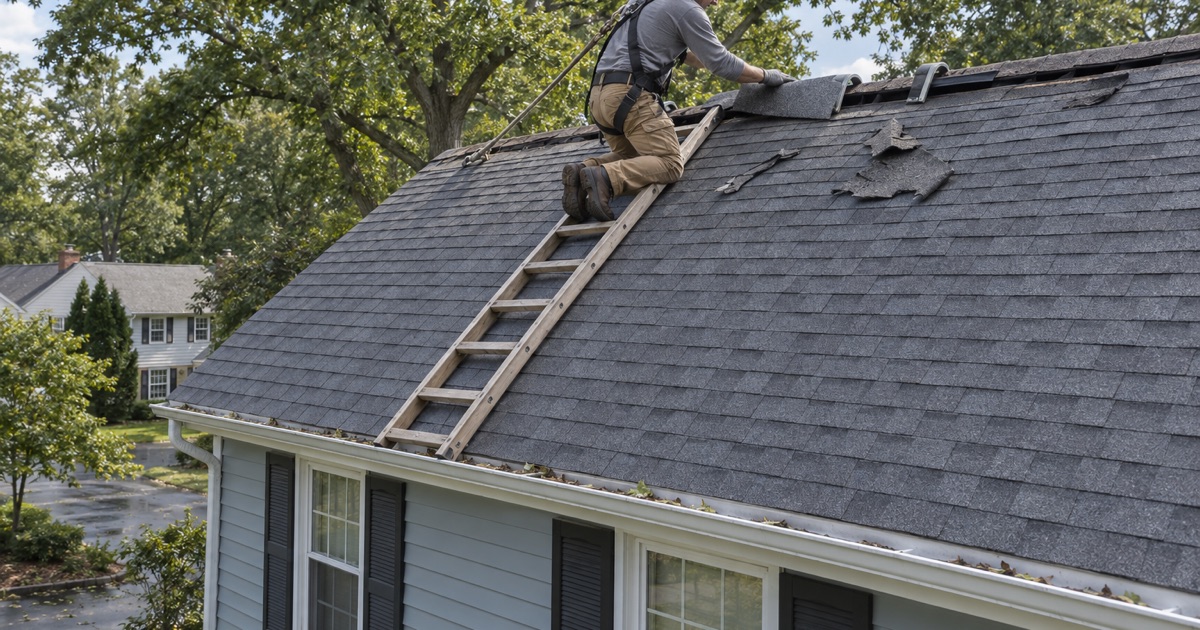
High winds lift shingle tabs, break the seal strip and crease the shingle along a line where it bent back. A creased shingle may lie flat again after the storm and still be damaged, because the crease is where it will tear next. Wind also strips ridge caps, lifts flashing at walls and chimneys and peels back drip edge at the rakes.
We inspect every slope by hand, lift-testing tabs near missing pieces and photographing creases close up, since this kind of damage is easy to miss from the ground and easy for an insurer to dismiss without evidence.
Hail Damage
Hail bruises asphalt shingles, knocking granules loose and fracturing the mat beneath. Fresh hail hits show as dark spots where granules are gone, often soft to the touch. Dents in gutters, vents and metal flashing confirm the size and direction of the hail. We mark and photograph hits on a test square on each slope so the pattern is clear.
Fallen Trees and Limbs
A falling limb can puncture the roof, break rafters and crack decking. After the tree is cleared, we assess the framing as well as the surface. A repair that only replaces shingles over a cracked rafter will leave a dip in the roof and a weak spot that fails later.
Water Entry After the Storm
Some storm damage only shows up as a leak days later, when the next rain finds a lifted tab or a loosened flashing. If a new stain appears after a storm, we trace it from the attic and tie it back to the storm damage where the evidence supports it.
From Tarp to Permanent Repair
Emergency Protection
When the roof is open, we cover it with a tarp fastened over the ridge with battens, or with a temporary patch of underlayment and plywood for smaller holes. We place fasteners where the roofing is already damaged so the cover does not create new leaks in sound sections of the roof.
Documenting the Damage
We photograph the damage before and after the temporary repair, slope by slope, along with dented metal and interior water damage. A written summary explains what was found and where, in plain terms, distinguishing storm damage from ordinary wear. That distinction helps a legitimate claim and avoids a denial caused by describing age as wind damage.
Meeting the Adjuster
If you ask, our crew will be on the roof when the adjuster arrives, ready to show the creases, hail hits and broken flashing we documented. Adjusters are busy after big storms, and having someone point out damage on each slope makes the inspection more thorough.
The Permanent Repair
Once the claim is settled or you decide how to proceed, we write up the permanent repair with each part of the work on its own line. For limited damage we match shingles as closely as the manufacturer’s current colors allow. When damage is widespread, or the existing shingles cannot be matched, a full replacement may be the more sensible result.
Insurance in New Jersey and Pennsylvania
How Claims Work
You report the loss, the insurer sends an adjuster, and the company decides what the policy covers. The New Jersey Department of Banking and Insurance publishes storm claims guidance for homeowners, and it is worth reading before you file. Pennsylvania homeowners deal with their own policy terms and state rules.
Deductibles and Older Roofs
Named storms can trigger a separate hurricane deductible in New Jersey under N.J.A.C. 11:2-42. Some policies also depreciate or limit coverage on older roofs, paying actual cash value rather than replacement cost. Those terms are set by your policy, so read the declarations page before assuming what a claim will pay.
Public Adjusters
If you want someone to negotiate your claim for you, New Jersey requires that person to be a public adjuster licensed under the Public Adjusters’ Licensing Act, N.J.S.A. 17:22B. A roofer who offers to negotiate your settlement or cover your deductible is offering something the law does not allow.
Protecting Yourself After a Storm
Storm Chasers
After big storms, out-of-area contractors go door to door offering quick inspections. Before signing anything, ask for the contractor’s New Jersey home improvement registration, or Pennsylvania HICPA registration across the river, and check it. A local roofer with a long history in the area will still be here when the warranty matters.
Your Contract Rights
Home improvement contracts in New Jersey and Pennsylvania carry a three-business-day cancellation right. Our contracts state it in writing according to the rules of the state the house is in, so you can review everything calmly before work begins, even when the storm made the decision feel urgent.
Flood Zones and Substantial Damage
Hamilton participates in the National Flood Insurance Program, and parts of the township along the Assunpink Creek have flooded in past storms. Where a building in a flood zone is badly damaged, the FEMA substantial damage rule can require the whole structure to be brought into compliance once repair costs pass 50 percent of its value. That decision belongs to the township, and we work with it rather than around it.
- 20+ Years on the Roof
- Free Written Estimates
- NJ and PA Contracts