Hamilton Elite Roofing installs and repairs metal roofing in Hamilton, NJ and nearby communities including Hopewell Township, Millstone Township, Robbinsville and Florence. In more than 20 years of roofing we have put metal on whole houses, on low porches where shingles struggle, and on barns and garages where long spans call for panels rather than shingles.
Metal is not the right answer for every roof, and it costs more up front than asphalt. It earns its place where a long service life, a low pitch, a historic look or a working outbuilding makes the difference. We explain those tradeoffs plainly before you decide.
The details decide whether a metal roof performs. Panel layout, clips, underlayment and especially flashing at walls, chimneys and vents are built differently for metal than for shingles, and that is where we focus.
Standing Seam Metal Roofing for Homes
How Standing Seam Panels Work
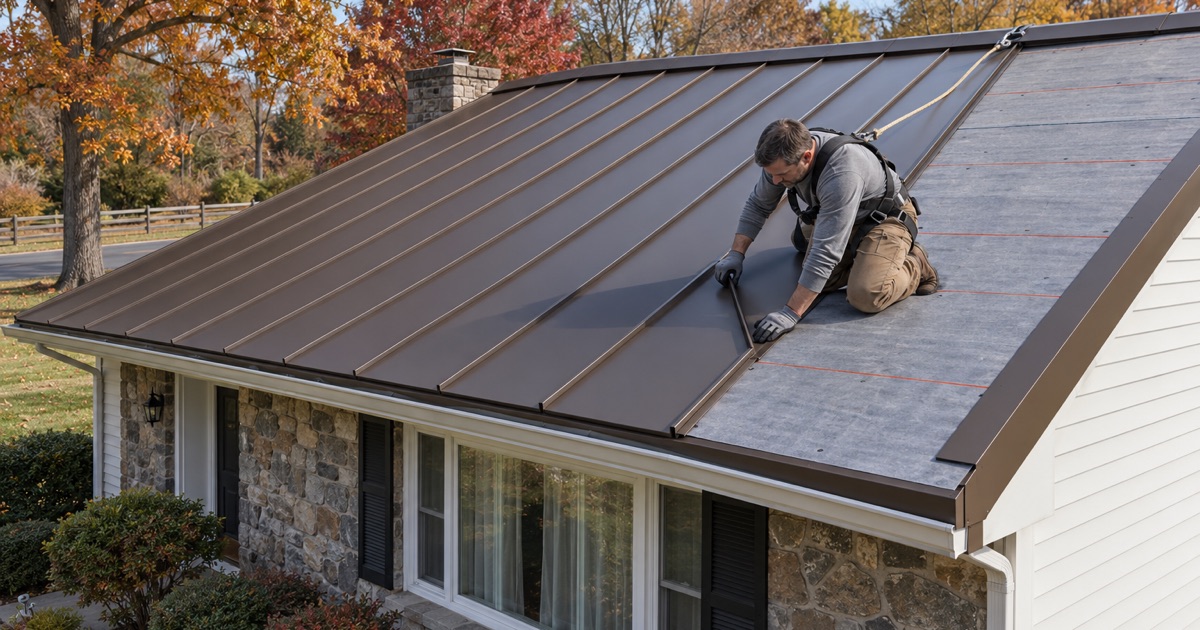
Standing seam panels run in one piece from the eave to the ridge, joined at raised seams that lock or snap together. Concealed clips fasten each panel to the deck, so no screw pierces the weather surface. The clips also let the metal expand and contract with temperature without tearing at fasteners.
Because there are no exposed fasteners, there are far fewer places for water to get in, and the clean vertical lines suit both traditional and modern houses. Panels come in factory-applied finishes in a range of colors.
Underlayment and Deck Preparation
Under a metal roof we strip the old covering, inspect and repair the deck, and install a high-temperature synthetic underlayment, with self-adhering ice and water barrier at the eaves, valleys and around penetrations. Metal sheds water quickly, but the underlayment beneath it is still the last line of defense against wind-driven rain and condensation.
New Jersey requires a full tear-off when two or more layers of roofing already exist, and we usually remove a single layer too, so the deck can be seen before it is covered for decades.
Flashing Built for Metal
Metal roofs need trim and flashing formed from matching metal: eave and rake trim, ridge caps, sidewall and headwall flashing, and chimney flashing with a cricket where the chimney is wide. Pipe boots designed for metal panels seal around vents. Shingle-style step flashing does not work on standing seam, and getting this detail wrong is the most common cause of leaks on metal roofs.
Metal on Porches and Low-Slope Sections
Porch and Bay Roofs
Porch roofs and bay window roofs are often too low in pitch for asphalt shingles to shed water reliably. Standing seam metal is rated for lower slopes and handles them well, and it adds a finished look against shingled main roofs. We tie the porch roof into the house wall with proper headwall flashing so water cannot run behind the siding.
Mixing Metal and Shingles
Many houses combine a shingled main roof with metal accents over porches, dormers or entryways. Where the two materials meet, we detail the transition so water from the shingles lands on the metal correctly and the different expansion rates do not pull the joint apart.
A copper or dark bronze standing seam accent over a front porch can set off a house with a gray or black architectural shingle main roof. We bring panel and finish samples so you can see the combination against the siding and trim before choosing, rather than picking from a brochure.
Metal Types and Finishes
Steel, Aluminum and Copper
Most residential standing seam is coated steel, which balances cost, strength and a wide range of colors. Aluminum does not rust and suits locations with heavy moisture exposure, though it dents more easily. Copper is the premium choice, developing its familiar patina over time, and is usually reserved for accents, bays and historic details.
Paint Systems and Color
Factory finishes on metal panels vary in how well they hold color and resist chalking in the sun. Higher-grade paint systems cost more but keep their appearance far longer. Lighter colors also reflect more summer heat, which can help an attic stay cooler. We explain the finish options available for each panel line before you pick a color.
Gauge and Panel Profile
Thicker gauges resist denting from hail and foot traffic, and wider or ribbed panel profiles reduce the waviness called oil canning that can show on flat panels in low sun. We recommend gauge and profile based on the roof’s exposure and the look you want, and explain why.
Barn, Garage and Outbuilding Roofs
Corrugated and Ribbed Panels
Barns, garages, sheds and stables often use corrugated or ribbed metal panels screwed to purlins over open framing. These exposed-fastener panels go up quickly over long spans and are economical for working buildings. We replace rusted or storm-damaged panels, refasten loose sheets and replace worn screws and washers that have started to leak.
The rubber washers on exposed fasteners dry out and crack long before the panels fail, and a roof with hundreds of screws has hundreds of potential leak points. Replacing those fasteners with new ones, slightly oversized where the original holes have widened, is often enough to dry out an old barn roof without replacing a single panel.
Cupolas, Ridge Vents and Long Spans
Cupolas and ridge vents on barns need their own flashing to stay dry, and long roof spans need panels lapped and fastened in the right sequence so wind cannot catch an edge. Where a building has condensation dripping from the underside of the panels, we look at ventilation and vapor control rather than just the roof.
Agricultural Buildings in Pennsylvania
In Pennsylvania, a building that qualifies as agricultural can fall under the agricultural exclusion in 34 Pa. Code 403.1(b)(4) of the Uniform Construction Code. Whether a particular barn qualifies depends on its use, and we confirm the requirement with the township before starting.
Is Metal Right for Your Roof?
Weighing Cost and Lifespan
A standing seam roof costs more to install than architectural shingles, so the choice depends on how long you plan to stay, the look you want and the shape of the roof. Owners planning to remain in a house for many years, or with low-pitch sections that shingles handle poorly, often find metal makes sense.
Snow, Noise and Solar
Snow slides off metal, so we add snow guards above doors, walkways and lower roofs. Over a solid deck and an insulated attic, rain noise is modest. Standing seam also works well with solar, since clamps can attach to the seams without drilling through the roof, which is worth considering if panels are in your plans.
- 20+ Years on the Roof
- Free Written Estimates
- NJ and PA Contracts