Hamilton Elite Roofing performs roof inspections in Hamilton, NJ and across the surrounding area, including Robbinsville, Burlington, Mount Holly and Bordentown Township, drawing on more than two decades of hands-on roofing work. An inspection from a working roofer looks at the roof the way someone who has to repair it would.
People ask for inspections for different reasons: a house going on the market, a buyer’s report that flagged the roof, an insurer asking about the roof’s age, a storm that dropped shingles in the yard, or a ceiling stain nobody can explain. The visit is the same in each case, but the report is written for the decision you are facing.
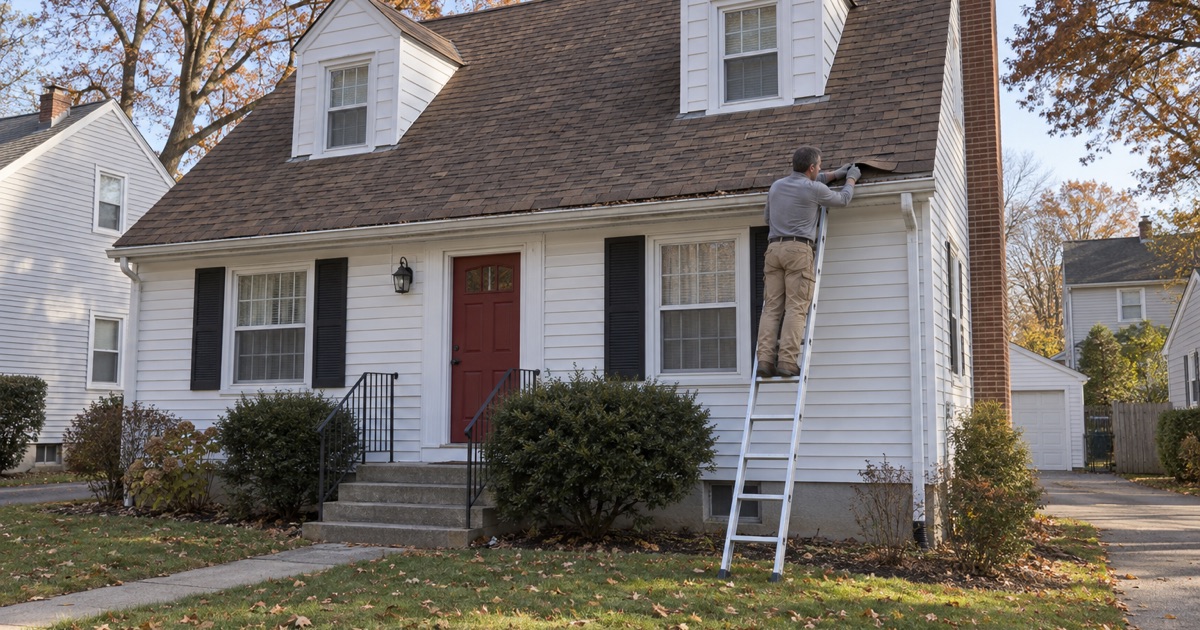
Every inspection covers both sides of the roof deck. We check the surface, flashing and gutters outside, then climb into the attic to look at the decking, ventilation and any sign of water, because that is where the evidence for a leak or a premature failure usually shows first.
What We Check on a Residential Roof Inspection
Shingles, Slopes and Remaining Life
We look at granule loss, cracking, curling, blistering and missing or creased shingles slope by slope, because a south-facing slope often ages faster than the north side of the same roof. We also note the shingle type, whether it is three-tab, architectural or impact-rated, and whether the roof is a single layer or has been covered over.
From that we give you a realistic view of remaining life. It is an informed judgment, not a guarantee, and the report explains what it is based on so you can weigh it yourself.
Flashing, Penetrations and Edges
Chimney counter flashing, step flashing along walls, kick-out flashing at roof-to-wall corners, pipe boots, skylight curbs and drip edge are the details most likely to fail before the shingles do. We inspect each one, photograph anything loose, rusted or missing, and note where an earlier repair relied on sealant rather than proper metal.
Chimneys get particular attention. We look at the crown for cracks, the mortar joints for erosion and whether a chimney wider than 30 inches has the cricket behind it that IRC R1003.20 calls for. A missing cricket lets water and debris collect against the back of the chimney, and that pocket is a common source of leaks that owners blame on the shingles.
Attic, Decking and Ventilation
Inside the attic we look for stained or delaminated sheathing, rusted nail tips, mold and daylight where none should appear. We compare soffit intake against ridge or box vent exhaust, because an attic that cannot breathe cooks shingles from underneath in summer and grows frost on the deck in winter.
The attic is also where we tell a roof leak from a plumbing or condensation problem. A bathroom fan venting into the attic, an HVAC line sweating in summer or frost melting off nail tips in a cold snap can all stain a ceiling. Naming the real cause in the report saves an owner from paying for roof work that would not have stopped the water.
Gutters and Drainage
Gutters that sag, overflow or pitch the wrong way send water behind the fascia and into foundations. We check the pitch, the leaders, the drip edge relationship and whether the gutters are sized for the roof area they drain, and we note any fascia rot the overflow has caused.
Gutters are easy to overlook in an inspection because they look like a separate system, but on many houses they cause the very damage blamed on the roof. Ice that builds in a clogged gutter can back meltwater under the first course of shingles, and a leader that dumps beside the foundation can show up as a wet basement wall. Both go in the report.
Lead-Safe Notes on Older Trim
On houses built before 1978, painted fascia, soffit and trim may contain lead paint. If the inspection finds trim that will need to be disturbed during a repair or replacement, we note it, because that work has to follow the EPA RRP lead-safe rule. Knowing that in advance keeps the later scope and schedule honest.
Inspections for Home Sales
A Written Report for Sellers
Sellers who know what the roof looks like before listing avoid surprises at the buyer’s inspection. We provide a written roof condition report covering age, material, condition and any repairs made, which the seller can hand to the buyer’s inspector. A clear document often settles a question that would otherwise turn into a price negotiation.
A Second Opinion for Buyers
When a home inspection report says the roof is near the end of its life or recommends evaluation by a roofer, buyers need specifics before the attorney review or inspection period closes. We inspect the roof, explain whether the concern is a repair or a replacement, and give you something concrete to take into the negotiation.
Townhouses and 55+ Communities
In attached-home and age-restricted communities, the association documents decide whether the roof is yours or the community’s. We check those documents before inspecting, so a buyer knows whether a worn roof is their cost or one the association’s capital reserve study should already be planning for.
Insurance, Storm and Commercial Inspections
Storm Damage Documentation
After wind or hail, we photograph creased and missing shingles, damaged vents and dented gutters, and write up what we see in a form you can submit with your own claim. We distinguish storm damage from ordinary wear in that write-up, because describing age as wind damage is the quickest route to a denied claim.
Older Roofs and Insurance Renewals
Some insurers ask for a roof’s age or condition at renewal, and some limit coverage on older roofs. An inspection documents the roof’s actual condition, which gives you and your agent something better than a guess. Whether your policy covers a given roof is a question for your insurer, and we do not answer it on their behalf.
Commercial and Low-Slope Roof Inspections
Flat roofs on storefronts, offices and mixed-use buildings need a different inspection: seams, blisters, ponding, drains, scuppers, parapet coping and rooftop unit curbs. We inspect modified bitumen, EPDM and TPO membranes, record what we find with photos and a roof plan sketch, and separate urgent repairs from items the owner can budget for later.
For association boards and building owners, the inspection record is also a planning tool. A dated report with photographs of each roof section gives a reserve study or a capital budget a factual starting point, instead of an age estimate pulled from a closing file.
What the Inspection Report Contains
Photographs and Plain Findings
Every report includes photographs of each slope, each flashing detail and the attic, labeled so you can see exactly what we are describing. Findings are written in plain language, with the roofing term in brackets where it helps, so that a buyer, a seller, an agent or an insurer can follow it without a glossary.
We separate what we saw from what we infer. A cracked boot is an observation; an estimate of remaining life is a judgment, and the report labels it as one.
Repair Versus Replacement Recommendations
Where the roof has isolated problems, the report lists them as repairs, in order of urgency. Where the roof is near the end of its life, we say so and explain the evidence. You get the repair answer first in either case, because many roofs flagged by a general inspection need a targeted flashing or boot repair rather than a new roof.
What Happens After the Inspection
The report is yours to use however you choose, whether that is negotiating a sale, filing a claim, planning a budget or hiring someone else for the work. If you want us to make the repairs, we quote them separately in writing, with each item listed so you can compare our price against any other contractor’s.
- 20+ Years on the Roof
- Free Written Estimates
- NJ and PA Contracts