
Hamilton Elite Roofing installs gutters in Hamilton, NJ as part of the roof, not as an afterthought, and we serve homeowners in Florence, Mount Holly, Robbinsville and Bordentown Township too. After more than 20 years on roofs here, we have seen how often the damage blamed on a roof actually starts at a gutter that was too small, pitched the wrong way or hung below the drip edge.
A gutter system has one job: collect the water coming off the roof and move it away from the house. Fascia rot, soffit stains, peeling paint, ice at the eaves and wet basements are all signs it is not doing that job. We size, pitch and place each run with the roof above it in mind.
Most of our gutter work is seamless aluminum gutters and leaders formed on site, but we also repair existing systems when they are sound, replace sections of rotted fascia, and add drip edge where an older roof never had it.
Residential Gutter Installation
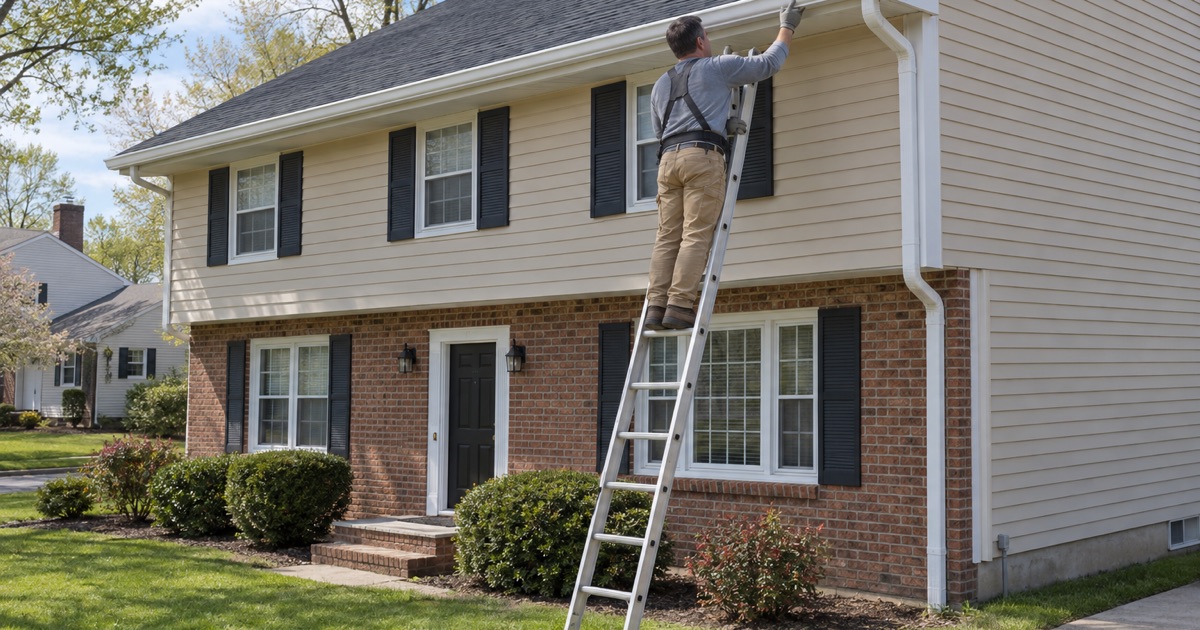
Seamless Aluminum Gutters
Seamless aluminum gutters are formed from a coil on a machine at the house, producing one continuous piece for each run. The only joints are at the corners and end caps, which removes the seams that cause most leaks in sectional gutters. Aluminum does not rust and comes in factory-finished colors that can match or contrast with the trim.
We fasten them with hidden hangers into the fascia board at close spacing, so the gutter holds its line under snow and ice instead of sagging between widely spaced spikes. Sagging gutters hold standing water, and that standing water is where rot and ice dams start.
Sizing Gutters and Leaders to the Roof
Gutter size should follow the roof area draining into it, the pitch of that roof and the number of leaders carrying water down. A standard residential gutter works on many houses, but a steep roof or a valley emptying a large area into a short run can overwhelm it in a heavy storm. In those spots we step up to a wider gutter or add leaders.
Leaders matter as much as the gutter. One leader for a long run means water has to travel too far, and an undersized leader backs up into the trough. We place leaders where the water naturally collects and size them so the gutter empties as fast as the roof fills it.
Pitch and Placement
A gutter needs a slight, consistent fall toward each leader so water does not stand. Too little and it pools; too much and it looks crooked from the street and can overflow at the low end. We set the line with a string and a level before hanging, and we keep the back edge of the gutter tucked under the drip edge so runoff lands in the trough.
Drip Edge and Fascia
Drip edge is the metal strip along the eave that carries water off the shingles and into the gutter. Many older Hamilton roofs were installed without it, and the result is water dripping down behind the gutter onto the fascia. When we install new gutters on a roof that lacks drip edge, we add it.
Where the fascia board is already soft, we replace the damaged sections before hanging the gutter, since a gutter fastened to rotted wood will pull away within a season. On houses built before 1978, painted fascia and trim are handled under the EPA RRP lead-safe rule.
Gutters Installed With a New Roof
Planning the Roof and Gutters Together
A tear-off usually loosens or damages the existing gutters, and the new drip edge has to line up with whatever is hung afterward. Installing them in the same project lets us set the drip edge, ice and water barrier and gutter height as one detail. Our roof estimates list gutters on their own line so you can see the cost separately and decide.
Ice Dams and the Eave Detail
Ice dams form at the eave, and gutters full of ice make them worse by giving the dam something to anchor to. A properly pitched gutter that drains completely, combined with self-adhering ice and water barrier along the eave and good attic ventilation, is the most reliable way to keep winter meltwater outside the house.
Heat cables are sometimes added in problem spots, but they treat the symptom. If an eave keeps building ice every winter, the attic above it is usually losing heat, and fixing the insulation and ventilation does more than any device in the gutter.
Solar Arrays and Gutter Access
On houses with solar panels near the eave, cleaning and repairing gutters gets harder because ladders and hands cannot reach past the array. When we install gutters on such a house, we consider guards that reduce cleaning and place leaders where they can still be reached, and we coordinate with any planned panel removal for a roof replacement.
Townhouses and Shared Runs
On attached homes, a gutter run may continue across the property line onto a neighbor’s roof edge, and one leader may serve two units. We plan those runs with both owners in mind and confirm in the association documents who is responsible for gutters before quoting, since in some communities they belong to the association.
Commercial and Multifamily Gutter Work
Larger Gutters and Downspouts
Commercial buildings, apartment blocks and storefronts often have long roof edges and large drainage areas. They may need wider or box-style gutters and larger downspouts to keep up with heavy rain. We size the system to the roof area and make sure discharge points do not dump onto walkways or entrances where ice would form.
Scuppers and Flat Roof Drainage
Flat roofs often drain through scuppers in the parapet wall into collector boxes and downspouts. When those clog or the collector box leaks, water runs down the face of the wall. We clear, reseal or replace the scupper and collector box connection so the low-slope roof drains as designed.
Gutter Repair and Maintenance
Repairs That Make Sense
Not every gutter problem needs a new system. Leaking corners can be resealed, sagging runs can be rehung, end caps can be replaced and pitch can be corrected. We repair gutters that are structurally sound and tell you when rust, split seams or undersizing make replacement the better use of money.
Leaders and Foundation Drainage
A leader that empties against the foundation sends roof water straight into the soil beside the basement wall. We extend leaders away from the house, add splash blocks or connect them to an existing drainage line where one is present, so the water the gutters collect does not end up in the basement.
Hamilton’s three creek systems, the Assunpink, Crosswicks and the Delaware River, have flooded parts of the township in past storms, and houses in low-lying neighborhoods know what standing water around a foundation can do. Gutters cannot prevent a flood, but they can make sure the roof is not dumping its own runoff beside the basement wall in every heavy rain.
Gutter Guards
Guards reduce how often gutters fill with leaves and seed pods, which matters most under mature trees. Mesh, perforated and reverse-curve designs each suit different situations. We choose one that fits the roof edge without lifting the first course of shingles or bridging the drip edge, since a badly fitted guard can send water over the gutter instead of into it.
Seasonal Cleaning
Even guarded gutters need occasional attention. Cleaning them in late fall after leaf drop and checking them again in spring keeps leaders clear and stops ice from forming in standing water. When we visit for any roof work, we look at the gutters and tell you if they need attention before the next season.
- 20+ Years on the Roof
- Free Written Estimates
- NJ and PA Contracts